Thursday, 29 November 2012

Brief 1: Exterior Location that never was!

I had a few different ideas for my Brief 1 - Exterior Location, but for some reason I think the forces of nature were working against me!!! All my attempts to try and work on a particular idea was fraught with disappointment to say the least!
 
One of my initial ideas was to photograph shadows and reflections - this is something I'm very familiar with and have photographed many images in the past that fits in with this theme.  It soon became apparent that it is a very popular theme and I wasn't alone in wanting to do this! So I decided maybe I needed to do something a little bit different - as well as being a perfectionist, I hate doing the same thing as everyone else! and I also thought maybe it would be good for me to get out of my comfort zone. 

Just a few of my shadows and reflections images -

I really love this beautiful majestic building - I think the person in the image adds a bit of human interest to the image - Old Royal Naval College, Greenwich, London

I spotted this shot as soon as I got off the train at Euston - luckily my camera was handy - you know what they say never go anywhere without your camera! There's some great lines of reflection coming through the windows, from the lights and the train and they mirror each other in such a beautiful way too. 


 This was from a trip out to Salford Quays - simple, elegant and beautiful  


 A visit to Chatsworth House enabled me to take this picture. I love the warmth of the lampshade reflected on the mirror, lighting some of the bed - could almost be someone's bedroom


 The two images above was taken at Media City, Salford. It's a great place for reflections because of the glass buildings - makes for great photography especially on a sunny day

I also toyed with the idea of photographing people at the local market - which in theory seems ok but the more I thought about it, the less appealing it became.  For someone who loves landscape, seascape, abstract etc photographing people is quite a scary prospect, and not always very appealing.  I know I wanted to be out of my comfort zone but I also wanted to have some good photographs and for that to happen, the subject matter would have to interest me.  And how appealing would this subject be to the viewers if I couldn't get myself motivated for it! It was also quite similar to a theme a colleague/friend was doing for his brief - and you know me - gotta stand out from the crowd! So I knocked this idea on the head!

One idea that I was very keen on, was photographing a Diwali event - for those of you who are unsure of what I'm talking about - Diwali is a festival of light, celebrated by those who follow the Hindu faith.  I was quite excited about this as I love anything to do with colour, light and movement.  A wonderful opportunity I thought to get something unique with a mixed array of colours, people and different types of activities.  The date was set for 28th Oct at Platt Fields Park.  I was pretty excited and was looking forward to getting some great images.  The day of the event came and the heavens decided to open up!! wet and miserable all day!! just my luck! I missed my only opportunity to get something unusual! By this stage I was running out of ideas!!

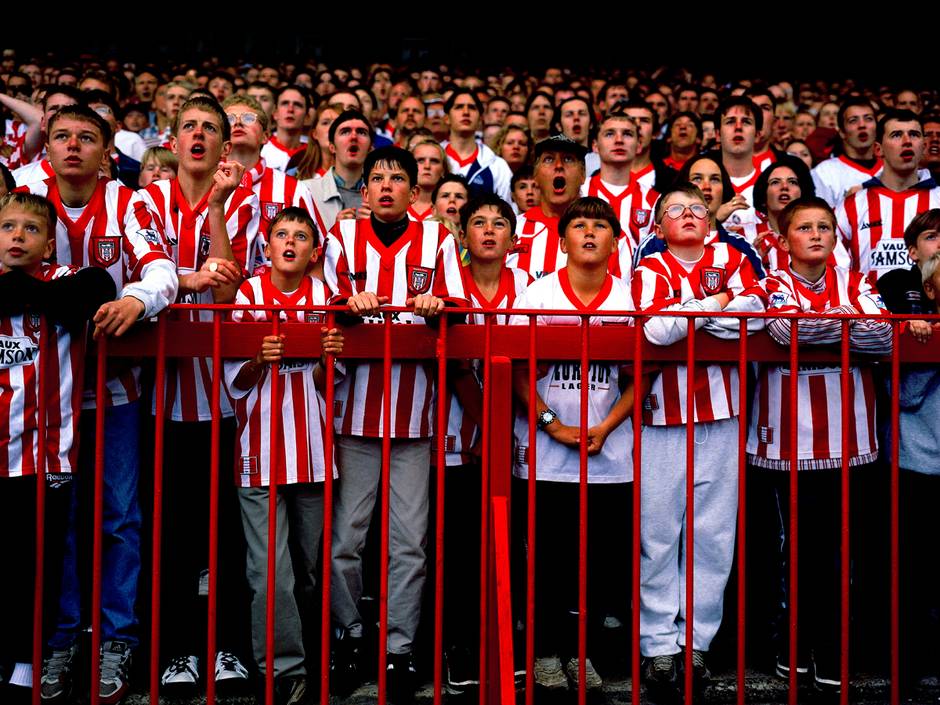
However, I did have one other idea up my sleeve I could pursue! As part of my trip out to Manchester we went to see an exhibition called Homes of Football by Stuart Roy Clarke at the Urbis.  Inspired by the diversity of images produced by Clarke I decided to contact the Communications Director at Sheffield Wednesday football club.  As I have watched many matches at Hillsborough, it was a ground I was pretty familiar with.  I wanted to capture the atmosphere and the spirit of the people at the match, rather than photographing the footballers.  To my utter disappointment I received a response saying I should start with the academy team first - meaning the under 18's team, before I "faced the cut and thrust of a team match"! Feeling a little bit patronised I sent off a response to argue my case but to my surprise I received no further response.  So that was the end of that!!        

Luckily for me I had one more idea I was keen to explore . . . . watch this space!!!

Some of the images by Clarke from his latest exhibition at the Urbis - very vibrant, full of life and colour.  Capturing the tense, emotional roller coaster ride of a football match


Saturday, 3 November 2012

Shutter Speed/Abstract - Xavier Rey

Self taught, French Fine Art photographer Xavier Rey only came to photography as recently as 2005.  Xavier is well known for his square, sea and waterscape photographs.  Majority of them taken in black in white with a very long exposure.  He's images are very minimalistic and have clean, soft lines and dream like feel to them.  The long exposure has helped to create a fluidity in the movement of his images.  They also have a very abstract feel to them.    
When I look at the images I feel they bring a certain sense of serenity, calmness and tranquillity.  Looking at his images it's so very easy to get lost in the moment - that moment of quite reflection.  This is one of the most wonderful ways of using long shutter speed and producing some fantastic images, of the beauty that surrounds all of us.      


Shutter Speed/Abstract - Chris Friel


Chris Friel is a colour blind, British painter who recently turned to photography in 2006.  Chris has been shortlisted for Sunday Times Landscape Photographer of the Year on many occasions.

When I first came across Chris Friels's photography I was completely blown away! His images are very atmospheric and have an ethereal feel to them.  They are breathtaking and captivating - Chris has managed to master the art of innovation and creativity with his images.
Using very long shutter speed, ND filters, Tilt Shift lenses and intentional camera movement, Chris manages to create unique masterpieces, which look absolutely stunning and very much like paintings. 

Looking through his images has certainly inspired me to try and emulate some of his techniques to achieve results which may be of a similar nature.
For someone who's drawn to landscape, colours, movement and shape I am completely mesmerised by his images! 

The intensity of colours, the softness of the texture and the abstract nature of the images are pretty awe-inspiring and certainly feel very special. 


White Balance

White Balance is probably one of the most under-used functions on a digital camera.  Most beginners are happy to set the camera on auto and let the camera decide on all the settings.  Understanding WB can really useful and help you to make adjustments according to variety of lighting conditions.
Adjusting the WB can help you to compensate for different lighting conditions and get the colours in your images as accurate as possible.  The colours we see with our naked eyes before taking a picture is not always what we get when we print an image.  We sometimes end up with images with a blue or yellow cast, this is because different light sources have different temperature. 
 
Any object that has colour is due to the colour temperature of the light source illuminating the object.  The variation in colour temperature is measured in degrees Kelvins.
 
The primary colours of red, green and blue in photography are used to achieve the desired results.  As stated below an opposite colour is introduced to neutralise a colour cast on an image.     
 
http://www.photography.ca/blog/2012/05/03/106-white-balance-in-photography/

 
I took the following images during a bright sunny afternoon when the sun was shining through the window.  I placed the cups and saucers on a white card on the dining table.  Selecting different white balance has helped me to produce some interesting results.  Selecting the Auto WB has given a slightly cooler result, whereas the the daylight control has given a slightly more accurate representation of the colour temperature.  Cloudy and Shady add too much warmth to the image and tungsten adds a blue cast on the image.      
 
It's always worth trying out different WB to see what results you get but even more so because in my opinion Auto doesn't always accurately represent the colours.  I think photography is all about experimenting and not always sticking to the rules - you could end up producing something wacky and wonderful! 

Auto White Balance
Daylight
Cloudy


Tungsten
 
Shady
Flash


White Fluorescent

Photographing the trees in my local park on a cloudy day I experimented with the white balance by selecting tungsten - it resulted in the image having a blue cast.   


 Similar image with a cloudy white balance gave me a more accurate representation of the light that day 

Friday, 2 November 2012

Depth of Field - Sally Mann

Born in 1951 in Virginia, Sally Mann is one of America's most renowned photographers and has received critical acclaim for her Immediate Family series.  This was a series of portraits of her children, often in the nude and taken outside.  The images have a dark and moody and sometimes unsettling feel to them.  Even though portraits of children, they have a very grown up feel to them - often demonstrating the loss if innocence.  The images are quite hypnotic in a way and draws you in to look further and beyond what you're seeing.    

Sally Mann's fascination with controversial subjects like death, decay, mortality and the human body is evident in most of her images.  Non more so than in her fifth book titled What Remains.  Her photography can appear very morbid and haunting for the viewer to digest, and provoke some strong reactions.  Her images challenges you to question your own fears of subjects like death and mortality and brings it all to the forefront - there's no hiding away from the reality of life and death. 
The imges below focus strongly on the faces of the children - their expressions, their body posture and their little individual personalities.  I don't feel they're quite reflective of what a typical image of a child should look like or the perception we have of how childrens images should be.  Shallow depth of field allows the viewer to be transfixed on the faces of the children and concentrate less on the background.          


This is one of my favourite images of the three children - adopting a very defiant stance - showing their strong characters 


Saturday, 20 October 2012

Shutter Speed

Alongside DOF, another of the key elements of exposure control is Shutter Speed.  This is usually measured in units of Exposure Value.  The shutter speed controls how long the sensor or a film plane is exposed to light.  Shutter speed is measured in seconds and fractions of a second.  The photographer has greater flexibility to determine how long they want to expose the sensor to light, depending on the effect or result they would like to achieve - whether 1/200 of a second (very fast shutter speed) or 1/4 second (very slow shutter speed - long exposure).  Another setting for controlling shutter speed is BULB. This allows the photographer to determine how long they want to keep the shutter open.   
Using shutter speed you can freeze movement and works well with waterfalls, sports or any fast moving subjects.  Slow shutter speed is also great for deliberate motion blur and low light photography as well as catching light trails when doing night photography.  To minimise blurring when shooting with a long shutter speed it is important to use a tripod, although Image Stabilisation also helps to keep the image in focus.  These days the semi automatic setting Shutter Priority in digital cameras allows you to set the shutter speed and the camera determines the rest. 
I discovered the joys of playing with shutter speed when one cold November evening I decided to do some photography during bonfire night.  I wanted to initially photograph fireworks but being a complete novice I was unprepared and did not have my tripod with me.  So I thought I could try photographing the fairground rides.  At first I was pretty unimpressed with the results and they didn't blow me away.  But then I started playing around with shutter speed and started using very long shutter speed whilst adding movement when photographing the rides - I was pretty ecstatic with what I achieved! I ended up with something pretty amazing and very abstract.  I loved the way the lights came alive and took their own shape - each one beautifully unique in it's own way.
Experimenting with shutter speed can be a great way to feed your photographic creativity and manipulate the visual effects of the final image.
Some of the images below from the Debdale park fairground rides. I love the dramatic structures, colours and shapes of the images. To me they convey drama, speed and excitement.  
f8, 1/8th, ISO 200, 39mm


f8, 1/8th, ISO 200, 55mm


f8, 1/6th, ISO 200, 55mm


                                                                              f6.3, 1/8th, ISO 200, 21mm - Barton Square at Xmas


Tuesday, 16 October 2012

Depth of field - Sebastiao Salgado

Sebastiao Salgado is one of the masters of social documentary photography.  Born in 1944 in Brazil, he initially trained as an economist.  He often travelled to Africa as part of his work and this is when he started to take an interest in photography.  In 1973 he abandoned his career as an economist and took up photography.  He travelled to Africa to document the famine travesty there.  He joined the international cooperative of photographers Magum Photos in 1979 but left in 1994 to start his own agency, with his wife, Amazonas Images.
Salgado has won numerous photographic prizes and is most famous for his social documentary images of workers in less developed countries. 
Most of his images are black and white and are quite are dark and moody.  Salgado's images show a moment in passing, even if the subjects appear to be still in the image.  Salgado's images go beyond the realm of photo journalism - they show real engagement with the subject and tries tell the story with greater complexity.  Salgado often documents images over several years.  His images are technically brilliant and each image gives a small glimpse of the real story that lies behind each photograph.  Although a champion of documentary photography, Salgado's images are very aesthetically pleasing and sometimes considered too beautiful.     
          
This is a really good example of shallow depth of field - the person in front is clearly in focus and the two people behind are slightly out of focus


This is one of my favourite images - beautiful silhouetted people against the mist and the haze.  The texture and contrast, dark and shade makes you linger on this image - makes you think about their journey and what lies beyond